

Discovering Costa Rica’s Secret Manta Ray Population
Unanswered questions, citizen science, and the marine biologist changing how we see the waters of Costa Rica’s Nicoya Peninsula.
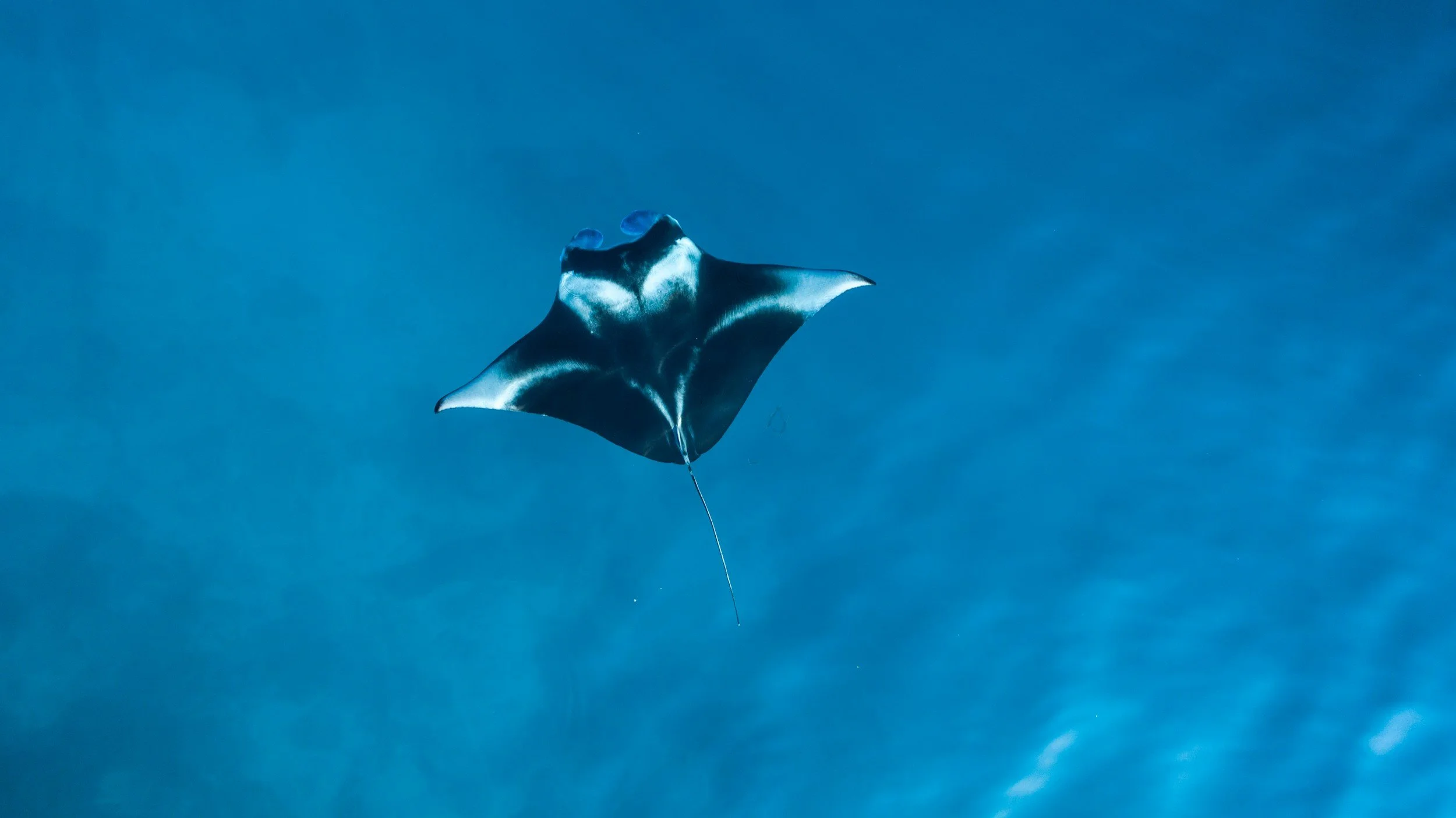
Every oceanic manta ray carries a constellation on its underside - a scatter of spots as definitive as a human fingerprint. Capture that unique pattern in a single photograph, and a fleeting underwater encounter becomes a permanent data point in a history we are only just learning to read.
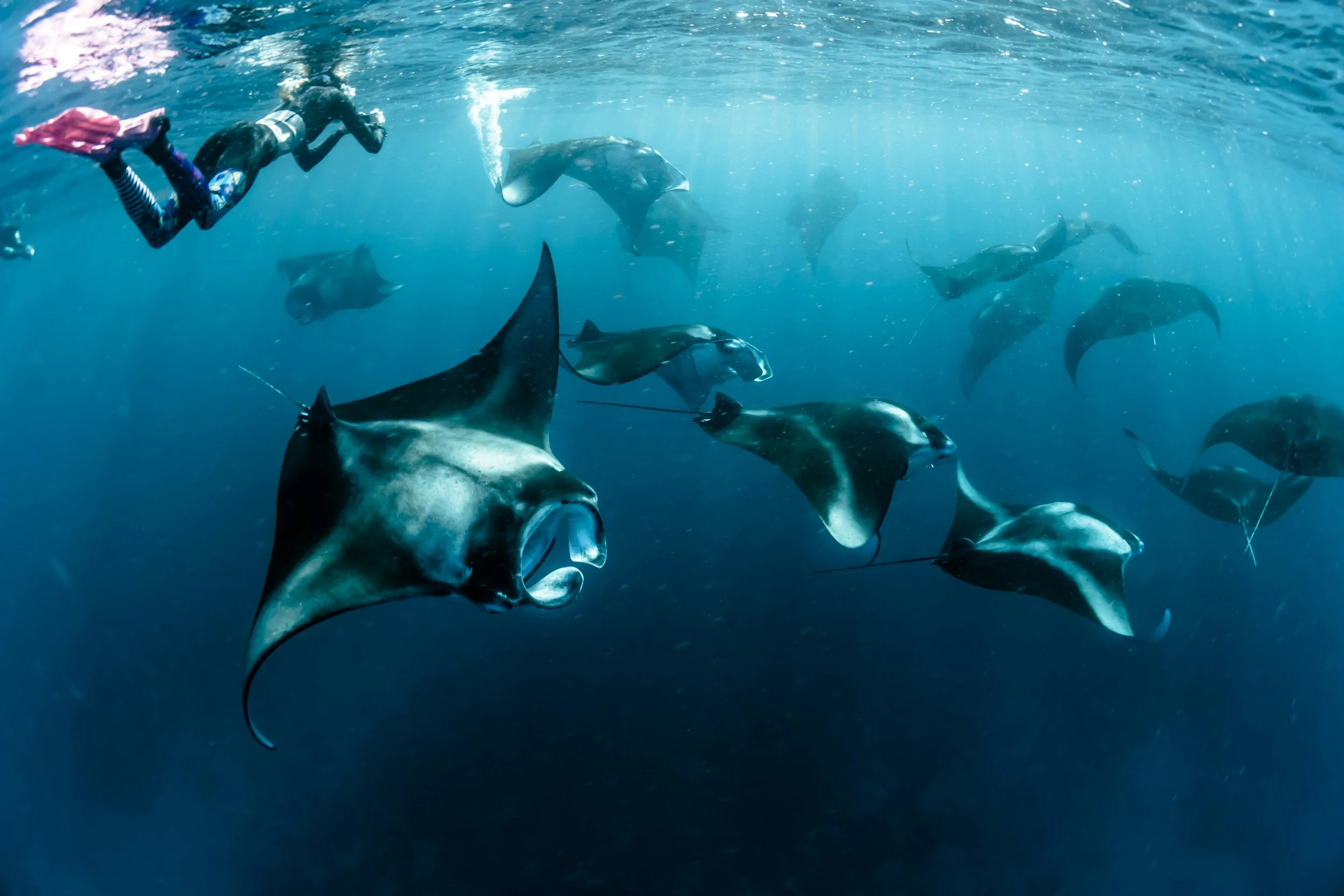
Nothing prepares you for the sheer magnitude of an oceanic manta ray. With majestic wingspans averaging six meters in Santa Teresa, Costa Rica, they move with a slow-motion, prehistoric grace that makes the surrounding ocean feel suddenly quiet. Between January and March, the coastal waters of Santa Teresa become a temporary sanctuary for these endangered giants. Yet, unlike other global habitats where mantas congregate to feed or mate, here Elly shares that they arrive for something else entirely: an ocean spa day. She notes that their main behaviours are visiting cleaning stations scattered around the Cabo Blanco Nature Reserve, hovering patiently while small fish meticulously clean their wings.
A Hidden Population
For years, this seasonal gathering was a secret. It wasn’t until Cindy from Iguana Divers - a female-owned, locally certified dive center, began documenting sightings that anyone realized Santa Teresa harbored the largest population of oceanic manta rays in Costa Rica. Recognizing the weight of this discovery, Iguana Divers partnered with the local conservation NGO, CREMA, to begin officially recording the endangered species.
This is where a standard dive in Santa Teresa transforms into citizen science. The data collection methodology is beautifully accessible: photo identification. When divers capture clear images of a manta's belly, researchers can track individuals across decades. Some mantas are regulars, appearing at the cleaning stations monthly. Others operate on their own mysterious timelines. One manta, easily recognizable by a distinct "Mickey Mouse" spot pattern, disappeared into the Pacific only to return exactly four years later to say hello.
The Scientist Behind the Sightings
Translating this raw imagery into global conservation is where Elly Dove comes in.
If you met Elly on land, you might first know her through the Santa Teresa community. She is a lifelong surfer who has been riding waves since she was five years old, and the kind of energetic, highly capable person who casually organizes tennis clubs and football teams. She is warm, gentle, and remarkably unassuming. You would have to ask directly to learn that she holds a Masters in Marine Vertebrate Ecology and Conservation, and is currently publishing the first-ever scientific paper on manta rays in Costa Rica in collaboration with The Manta Trust.
Elly’s research examines a fascinating demographic quirk within the Cabo Blanco Marine Management Area: the vast majority of visiting mantas are female. This data opens a floodgate of unanswered questions and research potential. Where do these females come from before arriving in Costa Rica? Where do they travel afterward? And why are the males largely absent?
These questions fundamentally change how we view a familiar coastline. A place we recognize by its surf breaks and beaches is also a critical habitat holding mysteries we are only beginning to decode.
An Untamed Ecosystem
The thrill of diving here extends far beyond the mantas. Plunging into the Cabo Blanco Nature Reserve and Marine Management Area feels like entering a thrumming, fully alive ecosystem. While waiting at the manta cleaning stations, the water around you is intensely active. It is common to find yourself sharing the current with gliding eagle rays, inquisitive sea turtles, and whitetip reef sharks resting quietly in the volcanic crevices. Massive, swirling schools of jacks and barracuda frequently block out the sun above, and on certain mornings, the distant, echoing songs of migrating humpbacks serve as the soundtrack to your dive. Every descent is wildly unpredictable, ensuring that even when you are looking for mantas, the Pacific always delivers something spectacular.
Opening the Water to Others
Ultimately, to see a manta ray gliding through the waters of Cabo Blanco is to instantly understand why they need protecting. It is a transformational experience, and one that Elly is dedicated to sharing with the next generation. Soon, she will be launching a Current Edition in partnership with Ophelia, offering children's snorkeling sessions designed to turn early curiosity into lifelong ocean stewardship.
For anyone planning to visit Costa Rica between January and March, getting into the water with Elly offers far more than a traditional dive. It is an invitation to contribute to a live scientific study, to search for a familiar manta ray pattern in the blue, and to explore the ocean alongside someone who truly understands its depths.
⸻
Discover Elly’s World
Experience the magic of manta rays in Santa Teresa, Costa Rica. Book a citizen science dive with Elly Dove and help document the endangered giants of the Cabo Blanco Nature Reserve.