

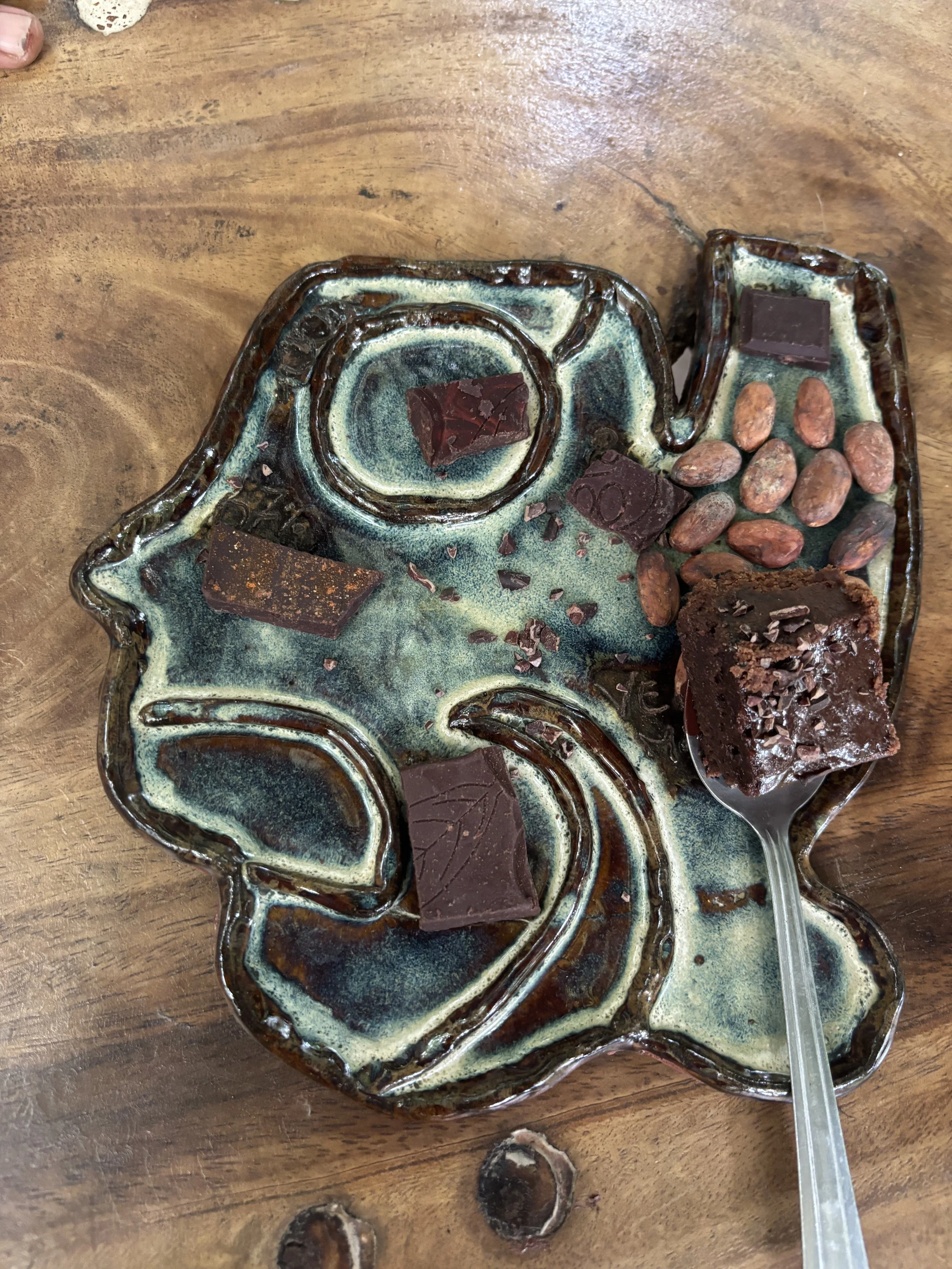
In Cabuya, the journey from cacao seed to chocolate bar reveals the knowledge of its Indigenous growers and the slow, precise craft of Gianni’s workshop.
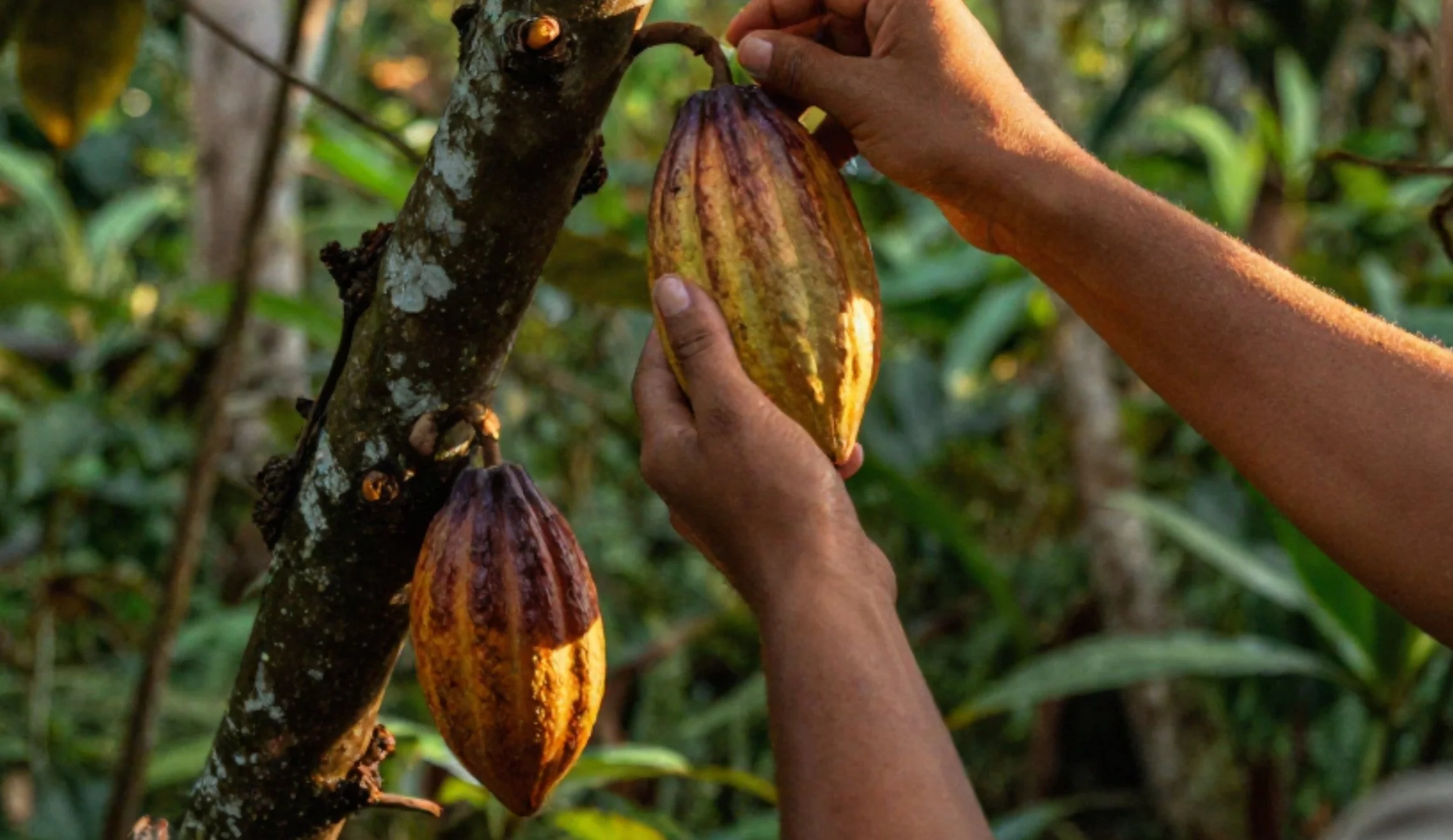
In its raw state, hanging from the trunk of a tree inside a thick, leathery pod, cacao looks nothing like chocolate. The seeds are enveloped in a white, creamy pulp that tastes surprisingly of lychee or mangosteen. To understand how this bitter seed becomes one of the world’s most revered foods, you have to leave modern industrial confectionery behind and step into the shade of the native canopy.
In his workshop in Cabuya, just steps from the gates of Cabo Blanco Nature Reserve, Gianni works with the quiet focus of a craftsman dedicated to an ancient trade. His work is not about mass-market chocolate; it is about restoring Theobroma cacao ‘food of the gods’ to its rightful place as an agricultural, medicinal and cultural art form.
Indigenous Ngöbe Agroforestry
Gianni’s process relies on direct, eco-social collaboration with Indigenous Ngöbe (Ngäbe-Buglé) cacao stewards. For the Ngöbe, cacao was never simply a crop to be grown in uniform rows. It grows within agroforestry systems: rainforest gardens where cacao trees thrive beneath the shade of taller native trees, surrounded by medicinal plants, forest fauna and banana trees. This shade-grown environment preserves wildlife corridors for jungle species whilst protecting delicate topsoil. Crucially, the slower growth under the canopy allows the cacao pods to absorb rich organic minerals from the soil, imparting a depth and complexity of flavour that industrial plantations struggle to replicate.
Spending an afternoon with Gianni learning about the transformation from bean to bar is fascinating. First comes fermentation, where fresh cacao seeds are packed into wooden boxes for up to a week. This crucial biological step unlocks the aromatic precursors of fine chocolate.
Next is sun-drying on elevated wooden beds under the Costa Rican sky, where the beans are turned by hand until their moisture levels fall. Then, in the Cabuya workshop, Gianni micro-roasts the dried beans in small batches, cracking and winnowing them to isolate pure cacao nibs. Finally, heavy stone wheels crush the nibs continuously for forty-eight hours, reducing their particle size until the natural cocoa butter releases into a glossy, velvety mass. Nothing is added except pure cacao and a subtle touch of unrefined, local cane sugar, tapa de dulce.

The Custodian of Cabuya
What makes Gianni’s mission so compelling is that his commitment goes far beyond purchasing raw agricultural ingredients. He views himself as a custodian of both the land and the cultural heritage tied to it. Deeply passionate about giving back to the Indigenous communities that have protected these cacao varieties for centuries, Gianni ensures that every step of his supply chain reinvests directly into Indigenous land sovereignty and local education.
Gianni is constantly launching new cultural initiatives to bridge the gap between travellers and Indigenous artisans. One of his next projects is to display and sell authentic handcrafted artwork, carvings and woven textiles created by Indigenous community members. By providing a direct, non-exploitative gallery space inside his shop, the proceeds return to the artists and their villages, supporting livelihoods that allow these artistic traditions to flourish. For Gianni, true land stewardship means realising that you cannot protect the jungle without empowering the people who inhabit it. To break off a piece of single-origin chocolate here is not merely a gourmet experience; it is an act of participation in a regenerative ecosystem.
A Single Origin Tasting
Free from any artificial emulsifiers, Gianni’s chocolate unfolds on the palate in distinct layers: a bright wave of red fruit and wild plum acidity, followed by deep notes of roasted nut, woodsmoke and dark earth. It is a profound, lingering reminder of what happens when human craft pays proper homage to Indigenous wisdom and the land that sustains it. To understand Gianni’s chocolate, taste it with him. Begin with the different percentages, close your eyes as he suggests and notice how much changes from one piece to the next. If there are brownies left when you finish, have one of those too.
⸻
Discover Gianni’s World
Discover Gianni’s experience in Cabuya, Costa Rica.
© 2026 The Current. For permissions and republication enquiries, please contact us