

A MARINE SCIENCE EXPEDITION TO COCOS ISLAND
Thirty-six hours offshore, marine biologist Elly Dove joins an expedition to study the ocean’s elusive giants.
Words by Nikki Paul · In conversation with Elly Dove
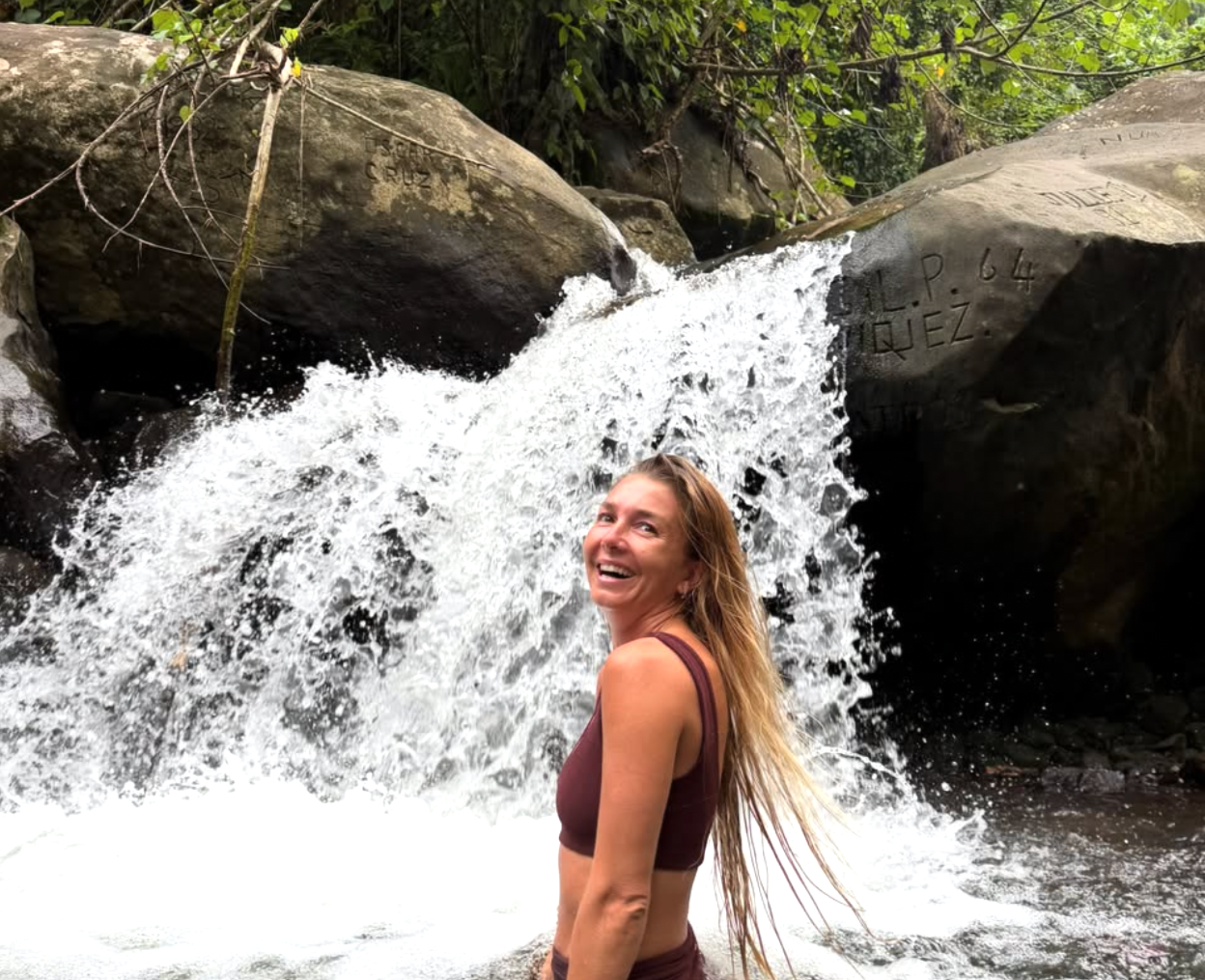
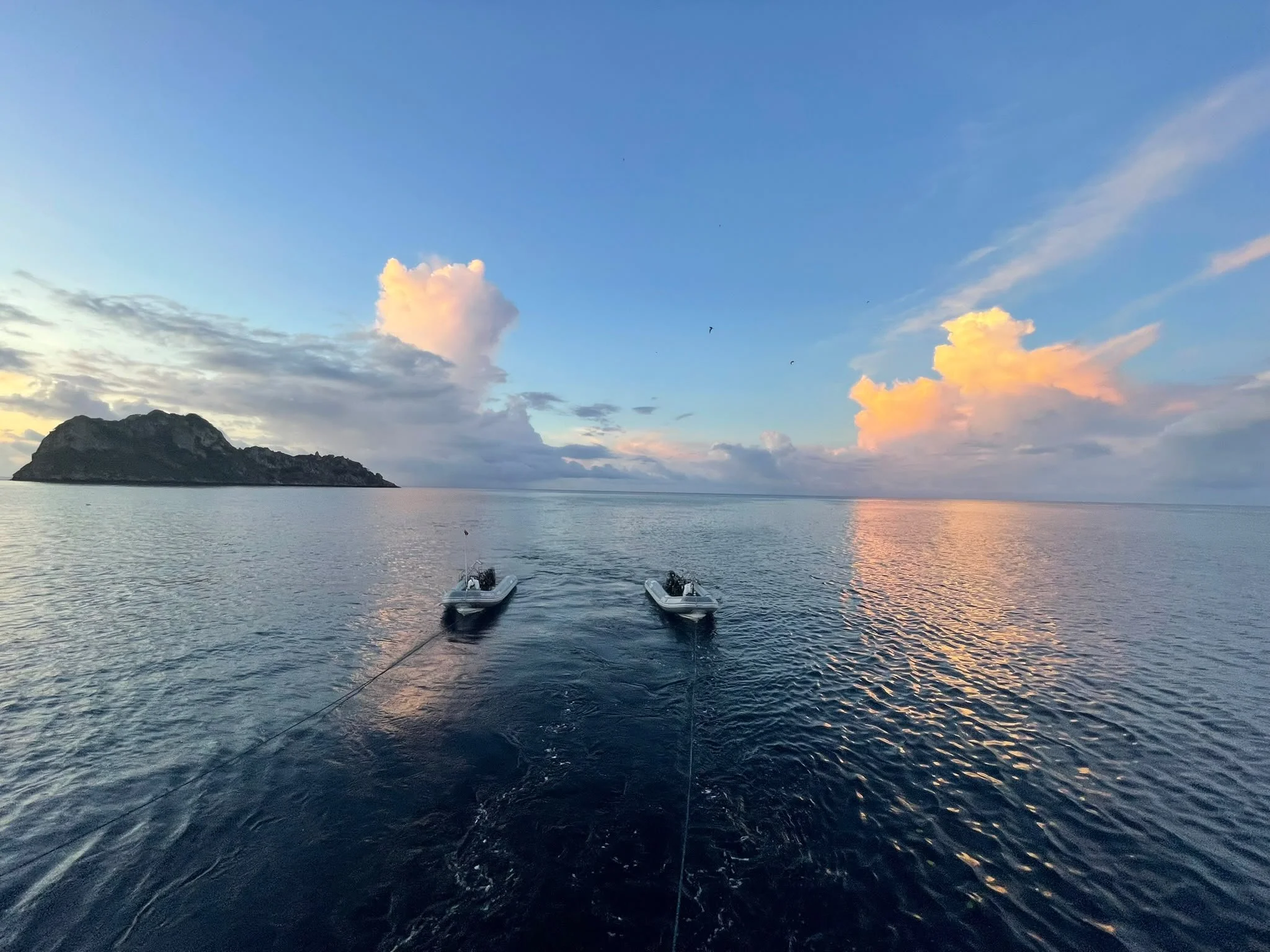
It takes thirty-six hours of open-ocean transit to reach Cocos Island. Lying roughly 340 miles off the Pacific coast of Costa Rica, it is a place that requires absolute intentionality to visit. When the island finally breaks the horizon, it looks like something pulled from another era: towering volcanic cliffs draped in dense, low-altitude cloud forest, with endless waterfalls cascading directly into the sea.
Where the fresh water pours into the ocean, it mixes with a nutrient-rich saltwater current that draws some of the most spectacular pelagic life on the planet. The visibility here is crystal-clear, a striking departure from the nutrient-heavy, murky waters of the coastline, revealing coral gardens and a staggering concentration of marine life.
But for marine scientist Elly Dove, returning to Cocos Island wasn’t just about the scenery. She was there as part of a highly specialised 10-day research expedition organised by Costa Rican marine conservation NGO, CREMA, led by Randall Arauz.
The Citizen Science Model
The voyage, hosted aboard the Okeanos Aggressor, operates on a brilliant ‘sponsor-a-scientist’ style model. It blends a traditional high-end live-aboard experience with active, frontline marine research. Tourists and recreational divers pay to join the expedition, effectively funding the science. In return they don't just get to dive Cocos Island; they get to witness marine biology at work.
The resulting atmosphere on the boat is uniquely electric and the passenger list is a global cross-section of deep curiosity. On Elly's trip, recreational divers shared breakfast tables with a researcher who transitioned from whale sharks to coral reef restoration, a terrestrial lizard specialist, and a doctor focused on marine turtles.
The rhythm of the days is immersive: eat, sleep, dive. You wake up, eat a light breakfast and descend on your first dive. Between the three daily dives, there is time to read in the sun, visit the island's ranger station, or swim in the waterfalls whilst in the evenings, just before dinner, the scientists deliver presentations on their findings. While the boat does offer Wi-Fi, the environment quietly encourages you to completely disconnect.
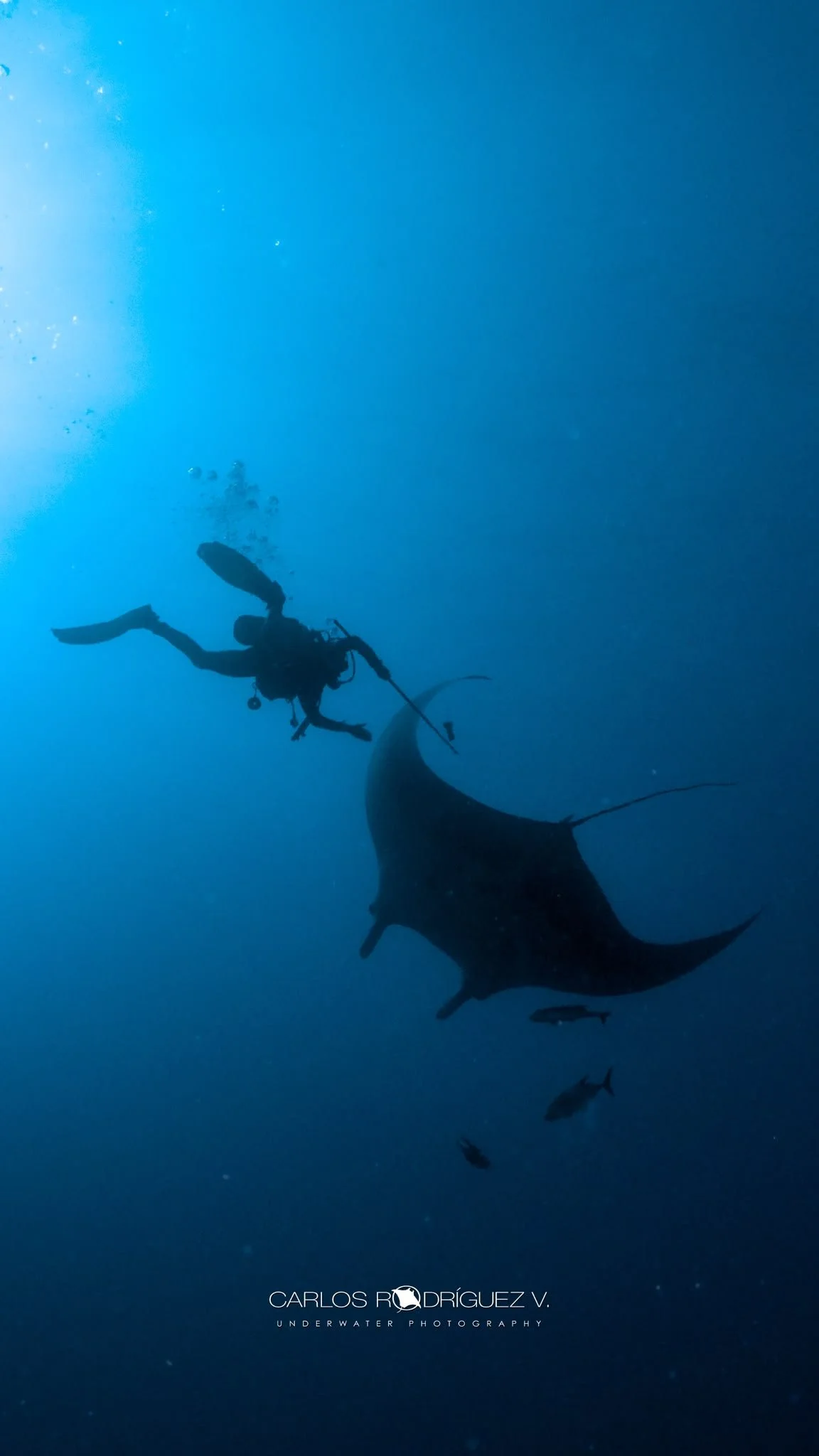
Elly tagging a Manta Ray
An Uncharted Population
For Elly and her team, the primary objective of this expedition was to study oceanic manta rays: tagging them, taking tissue samples and recording photographic identification of their unique belly markings.
On this expedition, the manta encounters were far more frequent than in previous years. Drawing on her extensive work analysing the manta population around the Cabo Blanco Nature Reserve, Elly immediately noticed two distinct differences. Firstly she observed that the Cocos mantas were visibly smaller than the coastal giants off the Nicoya Peninsula. Secondly, as they glided overhead, a close study of their undersides revealed spot patterns she didn't recognise at all.
This observation sparks a thrilling new scientific hypothesis: is there a completely separate, distinct population of oceanic manta rays living out at Cocos Island? Do they ever migrate to the coast to mingle with the Cabo Blanco females or do they remain completely isolated in the deep Pacific? Answering these questions will require years of comparative photo identification, but the seed of the inquiry began on this trip.
The Thermocline and the Hammerheads
To study the ocean is to study its temperature and this expedition offered a stark look at shifting global currents. Driven by climatic shifts, the surface waters around Cocos were unusually warm this season. This pushed the thermocline, the boundary layer where warm surface water meets the freezing deep, much further down than normal.
Because many shark species prefer the cold, they retreated to the depths. While this meant slightly fewer shallow-water shark encounters than on past trips, it offered a fascinating real-time lesson in behavioural ecology. It is a reminder that the ocean is not a static aquarium; it is a fluid, hyper-responsive environment.
And when the encounters did happen, they were breathtaking. At one point, drifting out in the deep blue, the water suddenly filled with a massive, synchronised school of scalloped hammerheads. Two to three hundred of them moved together in a silent, undulating wall of muscle and instinct.
Beyond the Dive
Crossing the Pacific to Cocos Island is a profound experience on its own. But to travel there alongside people who are actively decoding its ecosystems elevates the journey entirely.
It is the difference between simply looking at a manta ray and realising you might be looking at an entirely undocumented population. It is the difference between noticing the water is warm and understanding how that subtle shift changes the architecture of life a hundred feet below. For the divers who supported the CREMA expedition, they didn't just visit Cocos Island, they helped translate it.
⸻
Experience Citizen Science with Elly
Discover the magic of manta rays closer to shore through The Current. Book a citizen science dive with Elly Dove in Santa Teresa between January and March, and help document the endangered giants of the Cabo Blanco Nature Reserve.
© 2026 The Current. For permissions and republication enquiries, please contact us